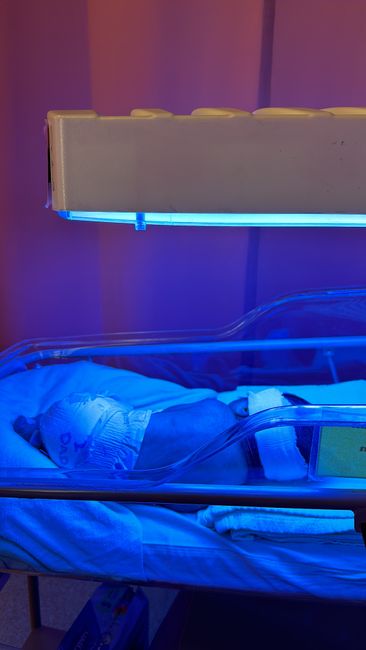
Photo by Luna Acieloo on Pexels
Ikterus Neonatorum akibat Telan Darah Maternal (P58.5): Tinjauan Komprehensif
📚 Daftar Pustaka (APA 7)
[1]
American Academy of Pediatrics. (2022). Clinical Practice Guideline: Management of Hyperbilirubinemia in the Newborn Infant 35 or More Weeks of Gestation. Pediatrics, 150(3), e2022058885.
[2]
Bhutani, V. K., & Wong, R. J. (2021). Neonatal Hyperbilirubinemia. In Nelson Textbook of Pediatrics (21st ed.). Elsevier.
[3]
Dijk, P. H., & Hulzebos, C. V. (2020). Topical Review: Neonatal Jaundice. Early Human Development, 156, 105-342.
[4]
Gourley, G. R. (2021). Bilirubin Metabolism and Neonatal Jaundice. In Avery's Diseases of the Newborn (11th ed.). Elsevier.
[5]
Hansen, T. W. R. (2020). Neonatal Jaundice: New Insights. Clinics in Perinatology, 47(4), 671-683.
[6]
Maisels, M. J., & Watchko, J. F. (2022). Neonatal Jaundice: A Practical Guide. Journal of Perinatology, 42(1), 1-8.
[7]
Mishra, S., et al. (2021). Swallowed Blood Syndrome in Neonates: A Case Series. International Journal of Contemporary Pediatrics, 8(3), 456-460.
[8]
Olusanya, B. O., et al. (2021). Management of Neonatal Jaundice in Low- and Middle-Income Countries. Pediatric Research, 89(3), 608-616.
[9]
Pashankar, D., & Schreiber, R. A. (2020). Jaundice in Older Children and Adolescents. Pediatrics in Review, 41(12), 623-635.
[10]
Watchko, J. F., & Tiribelli, C. (2021). Bilirubin-Induced Neurologic Damage. New England Journal of Medicine, 385(9), 835-845.